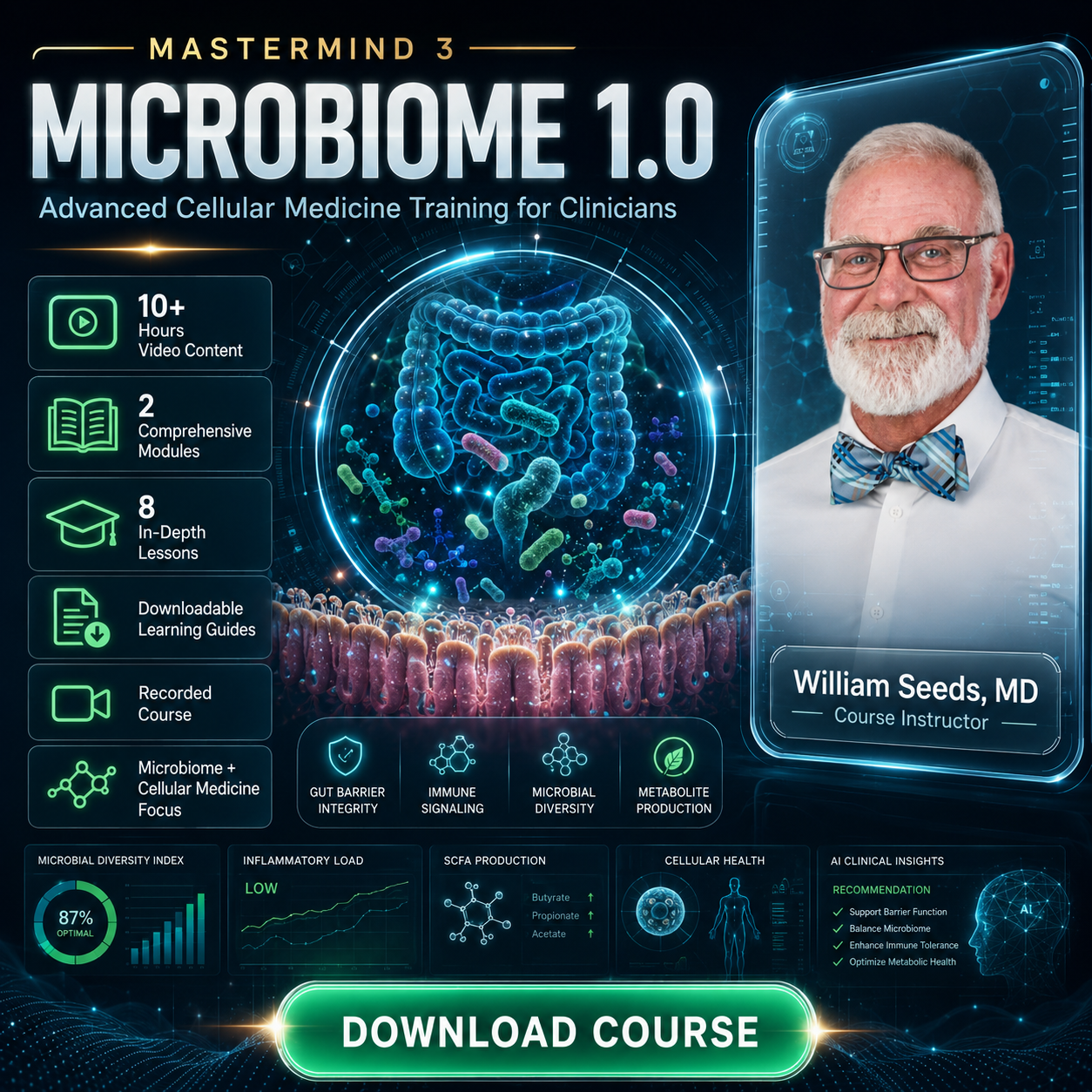
Mastermind 3: Microbiome 1.0
An advanced clinical exploration of the human microbiome and its profound impact on systemic health and physical performance. Discover cellular medicine strategies, the pathophysiology of gut dysbiosis, and therapeutic interventions.
For clinicians building stronger microbiome clinical reasoning
In this introductory mastermind on the microbiome, Dr. Seeds focuses on the importance of assessing the individual microbiome through a close examination of the factors that can push the lining of the colon out of balance.
You'll learn practical heuristics for dysbiosis (such as obligate versus facultative anaerobes), how short-chain fatty acids like butyrate are crucial to gut energy use and immune signaling, and how tryptophan can be routed into different metabolites with downstream effects on barrier defense pathways (including AHR to IL-22 signaling).
The training also reviews core features of gut immune architecture and how inflammatory signaling can shape microbial ecology over time. Clinicians have the opportunity to develop their skills in data interpretation and application when considering the use of either medication and nutrition to influence symptoms.
The cellular medicine approach to understanding the microbiome is designed to help guide individualized evaluation with longitudinal follow-up using measurable endpoints such as bowel patterns and selected stool markers and is well suited for medically trained providers and advanced learners who want mechanism-informed clinical context.
Target Audience
Best for integrative physicians and specialists who want updates on microbiome optimization, cellular health, and gut-directed therapies.
Learning Objectives
Understand the fundamental composition and function of the human microbiome and its relationship to overall cellular health.
Evaluate the impact of the microbiome on systemic metabolic efficiency, immune system regulation, and neuroinflammation.
Analyze the underlying causes of gut dysbiosis and its direct connection to chronic illnesses and diminished physical performance.
Implement evidence-based cellular medicine, targeted supplementation, and peptide therapies to restore and optimize microbiome balance.
Formulate comprehensive, personalized clinical protocols targeting gut health to improve patient outcomes, recovery, and longevity.
William Seeds MD
SSRP Founder & Academic Chairman
For over 40 years, Dr. Seeds has dedicated his career to studying cellular and molecular pathways within the human body. As the Founder and Academic Chairman of the Seeds Scientific Research & Performance (SSRP) Institute, he leads the field in Cellular Medicine and Epigenetics, bringing cutting-edge research to the forefront of patient care. Through the SSRP Institute, he cultivates a community of evidence-based providers committed to enhancing patient outcomes by integrating advanced cellular science into clinical practice. Dr. Seeds is also the Founder and Medical Director of the Redox Medical Group in Beverly Hills. His innovative approach focuses on improving patient outcomes by optimizing cellular efficiency and addressing the root causes of diseases, rather than merely managing symptoms. This methodology reflects a paradigm shift in medical treatment, emphasizing restorative processes at the cellular level.
Before establishing the SSRP Institute and Redox Medical Group, Dr. Seeds served as a board-certified orthopedic surgeon and sports medicine specialist for nearly three decades. His significant contributions to sports medicine have been recognized at the NFL Hall of Fame. He has consulted for athletes across all major sports leagues, including the NFL, NHL, MLB, NBA, and even the performers on "Dancing with the Stars."
A pioneer in medical education, he is the best-selling author of "Peptide Protocols: Volume 1," the leading handbook for practitioners interested in integrating peptides into their practice effectively. His latest book, "The Redox Promise," delves into proven protocols and supplements designed to enhance cellular efficiency. In addition to his books, Dr. Seeds has published numerous research articles, further solidifying his commitment to advancing the field of Cellular Medicine.
Course Details
- Over 10 hours of instructional video content
- 2 Comprehensive Modules
- 8 In-depth Lessons
- Targeted for integrative physicians and specialists
- Downloadable learning guides
Mastermind Orlando Agenda
Friday Feb 26, 2021 – Saturday February 27, 2021
Breakfast - Grand Ballroom East Terrace, Lobby Level
Sound, Video Testing and Checks start at 7:00AM EST
Introduction and Announcements
KEYNOTE: Metabolite-Based Therapeutic Strategy
Focusing on Defining Molecular Mechanisms and Pathways and Therapeutic Relevance Concerning the Microbiome.
Break
How Macronutrient Metabolism by the Gut Microbiome Influences Health and Wellness
Effects of Catabolism of Carbohydrates, Catabolism of amino acids, Catabolism of Lipids
30 Min Live Stream Q&A & Lunch
Molecular Pathways of Cellular Metabolism and the Tight Maintenance of the Microbiome
Break
Recognition of Hydrogenotroph and Relevance in the Gut Microbiome
Cocktail Hour & SSRP Dinner Reception
Semi-Formal Attire. For Live Registrants Only.
Breakfast - Grand Ballroom East Terrace, Lobby Level
Sound, Video Testing and Checks start at 7:00AM EST
Introduction and Announcements
KEYNOTE: Molecular Pathways and Host Receptors
That Link Gut Microbiota-Derived Products and Metabolites with Cardiovascular and Cardiometabolic Disease Phenotypes
Break
How the Microbiome Manipulates and Influences
Atherosclerosis, Thrombosis, Cardio Renal Thrombosis, Vascular Function, Lipid Metabolism, and Glucose/Insulin Metabolism
30 Min Live Stream Q&A & Lunch
How the Microbiome Manipulates and Influences
Blood Pressure Homeostasis, Myocardial Repair, Myocardial Inflammation and Immunity, and Relation to Atrial Fibrillation
Break
Relationship of Gut Microbial Dysbiosis and Respiratory Disease (Gut-Lung Axis)
Relationship of Lung Microbiota and Respiratory Disease in: Asthma, Chronic Obstructive Pulmonary Disease (COPD), Cystic fibrosis (CF), Lung cancer, Respiratory Infection. Conclusion & Why the Microbiome is the Future of Peptides that will be studied.
Reviews
There are no reviews yet.